Respect the Winter Surface
In the Norwegian mountains, winter conditions are not restricted to January and February. High passes routinely encounter snow flurries from late September into June, while true winter crossings over Hardangervidda (Rv7), Hemsedalsfjellet (Rv52), Filefjell (E16), and Saltfjellet (E6) demand disciplined preparation.
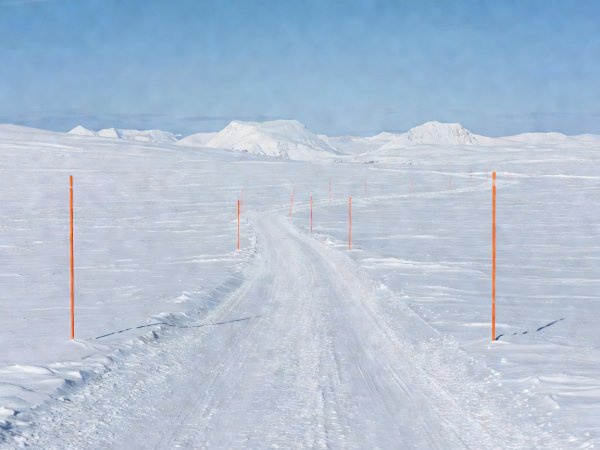
Understanding the difference between Central European winter tyres and Nordic compounds, reading bamboo snow markers (brøytestikker), and obeying convoy gates are essential skills.
How Convoy Driving Works
When high winds whip snow across a treeless plateau, visibility drops to a few metres and drifts refill the carriageway minutes after a plough passes. Rather than closing trunk roads indefinitely, road crews institute kolonnekjøring (convoy driving) between barrier gates.
-
Plough Inspection at the Barrier
The snowplough leader has legal authority to refuse entry to any vehicle lacking proper winter tyres, adequate fuel/battery charge, or emergency warm clothing.
-
Hazard Lights & Steady Spacing
Keep hazard lights or rear fog lights on as instructed by the convoy crew. Maintain constant visual contact with the vehicle ahead; never overtake or leave the vehicle line.
-
If the Convoy Halts
Stay inside your belted seats with the engine or heater running (ensuring the exhaust tailpipe remains clear of drifting snow). A sweep vehicle trails the end of the column to assist stalled cars.
Winter Surface & Tyre Reference
Always match your speed and following distance to the exact surface state rather than the posted speed limit sign.
| Surface State | Typical Temperature Range | Traction Behaviour | Driver Adjustment |
|---|---|---|---|
| Cold Packed Snow (Hardpakket snø) |
-5°C to -20°C | Predictable grip on Nordic friction or studded tyres; gentle breakaway. | Double normal following distance; use smooth steering inputs. |
| Wet Ice / Thaw Glaze (Nullføre / Holke) |
+1°C to -2°C | Lowest possible friction coefficient; water film forms atop compacted ice. | Triple following distance; test grip gently on a straight with no following traffic; consider delaying crossing until gritting/salting trucks pass. |
| Deep Slush (Slaps) |
0°C to +4°C | Slush ridges between wheel tracks pull steering laterally during lane changes. | Keep both hands firm on the wheel; ease off throttle rather than braking if a wheel catches a slush ridge. |
| Tunnel Condensation Ice | Sub-zero exterior entering humid tunnel | Invisible frost film forms during the first 150 metres inside tunnel portals. | Complete all braking and gear changes before entering or exiting mountain tunnels. |
Which Passes Close Completely for Winter?
Do not rely on summer route memories when planning a journey between November and May. Heritage and tourist passes including Trollstigen (Fv63), Geiranger–Langvatnet (Fv63), Sognefjellet (Fv55), Aurlandsfjellet (Fv5627), Gamle Strynefjellsvegen (Fv258), and Røldalsfjellet are intentionally left unploughed through winter.
During winter months, East–West travel funnels onto engineered all-weather corridors: E16 Filefjell (often the most wind-sheltered crossing between Oslo and Bergen), Rv52 Hemsedalsfjellet, E134 Haukelifjell, Rv15 Strynefjellet, and E6 Dovrefjell.
Read Road-Trip FAQs