Set Up for the Mountain Miles
Whether you are bringing your own vehicle via ferry to Kristiansand or collecting a rental car at Oslo Airport Gardermoen, fifteen minutes of structured inspection prevents the vast majority of roadside delays on mountain passes.
Thermal load on brakes, tyre sidewall flex under luggage weight, and headlamp settings in unlit rock tunnels deserve attention before you leave the valley floor.
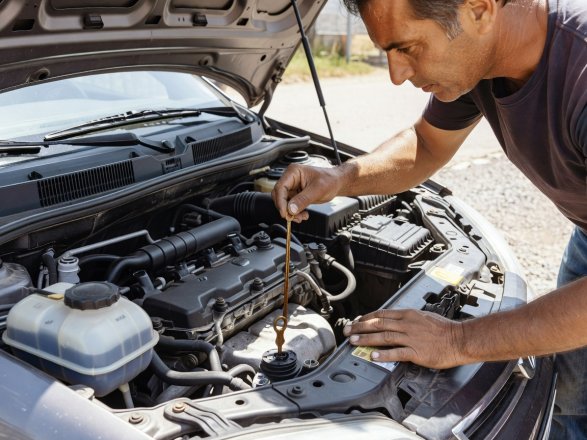
Preventing Brake Fade on Long Descents
Descending from Dalsnibba (1,476 m) to Geirangerfjord (0 m) or down the Lysebotn road (Fv4224) with 27 hairpins converts massive potential energy into heat. Riding the footbrake continuously boils degraded brake fluid and glazes pads within minutes.
-
Select Low Gear or "B" Mode at the Summit
In combustion and hybrid vehicles, engage manual sequential mode (2nd or 3rd gear) or "B" mode before the gradient steepens so engine compression holds speed steady.
-
Firm, Brief Braking Applications
Apply firm brake pressure on straight approaches before hairpins to shed speed, then release the pedal through the turn so airflow cools the rotors.
-
EV Regenerative Braking Limits
Electric vehicles recover energy cleanly downhill—unless the battery was charged to 100% right at the top of the mountain. Leave a 10–15% buffer at elevation so full regen remains available.
Pre-Departure Vehicle Inspection Table
Work through these six checkpoints before starting a multi-day circuit across Western or Central Norway.
| System | Legal / Recommended Standard | Practical Verification Action |
|---|---|---|
| Summer Tyres | 1.6 mm legal minimum; 3.0+ mm recommended for wet mountain tarmac | Inspect tread wear bars across inner and outer shoulders; adjust pressure to "full load" door-pillar placard value. |
| Winter Tyres | 3.0 mm legal minimum; 5.0+ mm recommended for snow and slush passes | Verify Nordic non-studded (friksjonsdekk) or studded tyres with the Three-Peak Mountain Snowflake symbol. |
| Lighting | Mandatory dipped headlights (kjørelys) at all times | Confirm automatic daytime running lights also illuminate rear tail lamps inside dark mountain tunnels; switch manually to dipped beam if needed. |
| Safety Gear | 1 EN ISO 20471 reflective vest reachable from driver's seat + warning triangle | Move reflective vests for all passengers from the spare-wheel well into the door pockets before departure. |
| Windscreen & Wipers | Streak-free sweep and frost-resistant washer fluid | Top up reservoir with fluid rated to at least -15°C in spring/autumn; clean inside glass to reduce low-angle glare. |
| Puncture Repair / Spare | Functional inflator kit, locking wheel nut key, or spare wheel | Confirm location of towing eye and 12V compressor; check whether rental contracts cover remote mountain recovery. |
Rental Car Pick-Up Protocol at Norwegian Airports & Hubs
When collecting a rental vehicle in Oslo, Bergen, Stavanger, Ålesund, or Tromsø, verify three specifics at the desk before walking to the garage:
First, confirm the fitted tyre compound matches your itinerary altitude, not just the coastal city weather. Second, ask the agent to demonstrate where the charging cable (Type 2 for destination AC posts) and high-visibility vests are stowed. Third, verify how the fleet handles AutoPASS toll and ferry billing so you know that automatic number-plate recognition (ANPR) on fjord crossings requires no manual ticket booth stops.
Next: Plan EV Charging